


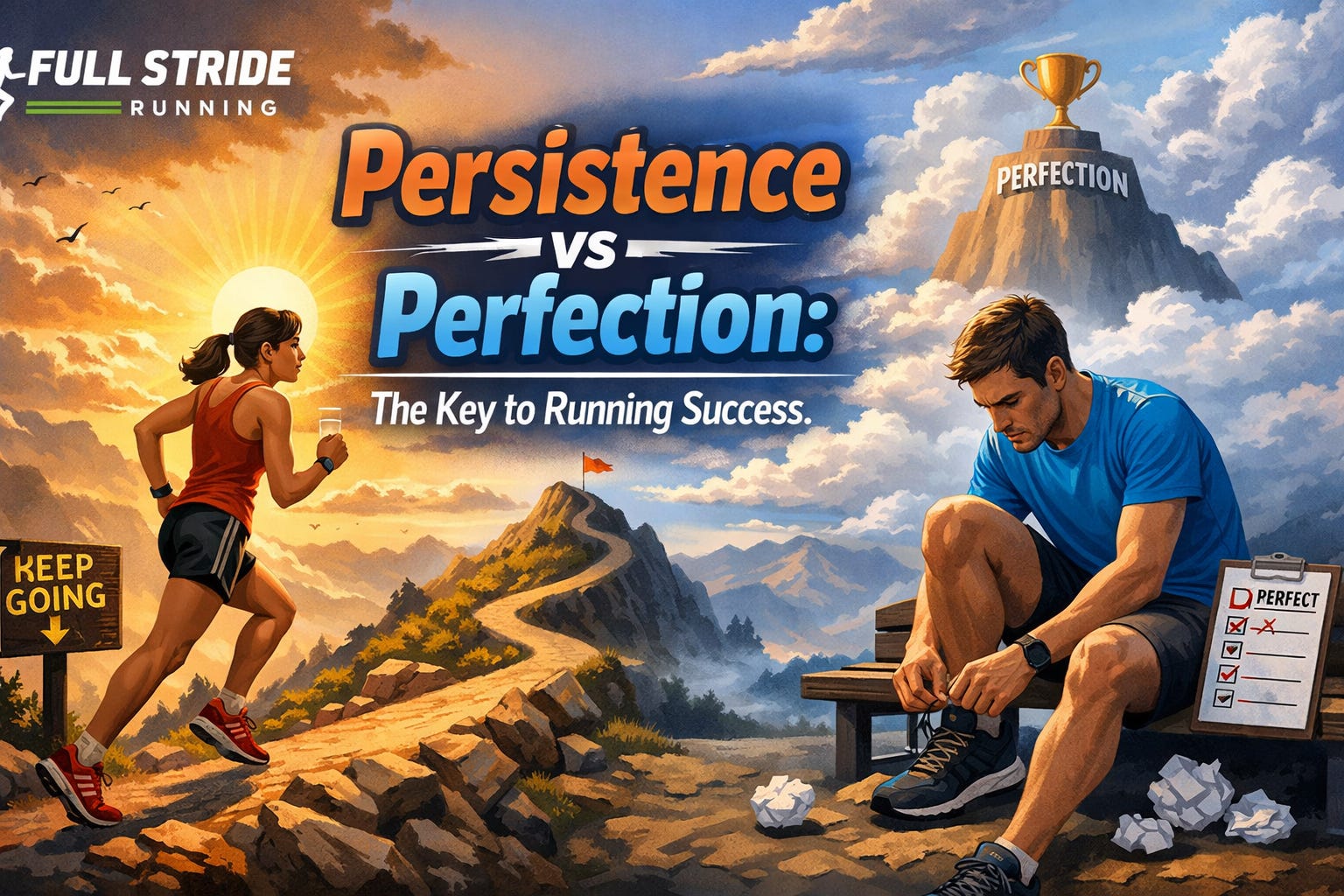
I used to be a perfectionist when it came to running.
For years, I scoured every running book and article I could find, looking for the answer that would take me from a decent regional runner to a great one.
I was convinced of two things: first, I had no real talent and would therefore have to rely on training smarter, harder, or simply more than anyone else. Second, I was sure there must be some secret to running well that elite runners possessed and weren’t sharing with others.
If I could only learn the secret, so I thought, I could finally get to the level I so desired.
Spoiler alert: I was wrong. Hopelessly, irretrievably wrong.
The Fallacy of Training Harder and Smarter than Everyone Else
For one thing, I did possess some talent. Not world-beating talent, but enough that I won my fair share of races and had some achievements of which I was proud. But mostly, trying to train harder, smarter, or more than everyone else hindered my progress substantially.
It hindered me because trying to train as hard as I could all the time left me with little energy for actual races.
I trashed myself in practice several times a week and would frequently run some good races early in the season, then fail miserably later on when the Championship races came around.
I thought I was a head case. More than one of my coaches thought so too (not that they ever said it in so many words…).
I realize now it wasn’t a lack of mental fortitude, I was just over-trained.
All of that hard training left me exhausted, stressed out, and dreading the ordeal on race days. When the going got tough in the race, instead of looking forward to the challenge of seeing what I could do, all I was thinking was, “Oh God, not this again.”
One of my high school coaches almost stumbled on the problem. He noticed I was sweating buckets, even in warmups, and recognized that I was over-stressed and that something was not right.
He suggested maybe dietary issues or lack of sleep were the problem, never realizing I was running workouts three times a week that were far more difficult than any of my races. And on my “recovery days,” I was running far closer to a threshold pace than an easy pace.
I was completely cooked, but I was convinced I wasn’t training hard enough.
As I got older, my training errors started to hinder me in other ways. This time through injury.
As I got into my mid-thirties, I was convinced I needed to run the 100 miles per week I thought Olympic calibre athletes required. I never got higher than the mid-80s, but still, I was injured frequently, grumpy and irritable 90% of the time, and very inconsistent in races.
I’d run a couple of good races, then have a complete disaster next time out. I was still trying to train harder than anyone else and still paying the price.
It wasn’t until I hit my 50s that I started to become more consistent. I cut back to only one faster workout per week, slowed down a lot of my easier runs, and ran a weekly mileage level that was more appropriate for my age and ability.
To my great surprise, I started running better in races. I had more determination, more fight, and more desire to compete during the actual races since I wasn’t competing with myself several times a week in training.
I managed to string together long stretches of training without getting injured.
And I actually started to enjoy running more than ever before.
The Fallacy that Elite Runners Have It All Figured Out
The other mistake I made was my assumption that elite runners somehow had it all figured out.
Over my running years, I was lucky enough to be coached by an Olympian, a national cross-country team member, and a coach of an Olympic silver medallist. Three people who I assumed had it all figured out.
As it turned out, I ran at about the same level with each one.
None of them had any magic secrets to suddenly turn me into a world beater. Or even a National Team member.
No matter what training system I tried, the results were all more or less the same.
As Harold Abrams’ coach says in Chariots of Fire, “You can’t put in what God left out.” I couldn’t escape the level of natural talent I was born with.
Not only that, I’ve seen interviews with many former elites who’ve spoken about how they significantly overtrained during their competitive years and might’ve run faster had they trained more sensibly.
Undoubtedly they had a lot of talent and did a lot of things right, but they didn’t have a monopoly on training knowledge just because they made a national team or some other lofty achievement.
The Power of Persistence
Instead of focusing on all that, if I could start over again, I’d focus on the value of persistence.
Former Canadian national team runner Steve Boyd once remarked that if there was one singular talent required for running success, it was the talent for getting your ass out the door to run every day. There is a lot of truth in that statement.
Or there is the famous quote from John L Parker’s Once A Runner, “What was the secret, they wanted to know. In a thousand different ways they wanted to know The Secret. And none of them, not one, was prepared, truly prepared to believe that it was not so much to do with chemicals and zippy mental tricks as with that most un-profound and heart rending process of removing, molecule by molecule, the very tough rubber that comprised the bottom of his training shoes. The trial of miles, miles of trials. How could they be expected to understand that?”
There is no doubt that persistence is a key requirement for distance runners, both in finishing a tough race and in completing the required training to get to the starting line in the first place.
Nobody succeeds as a runner overnight.
It takes years of consistent training to get anywhere close to your best level. And in those years, you will experience setbacks, injury, illness, lack of motivation, and a host of other roadblocks that can derail your success.
More so than complicated training formulas or a willingness to thrash yourself in training, simple, dogged persistence over weeks and months and years will bring you to whatever level you are capable of achieving in running.
I think this is why there is so much respect and camaraderie among runners.
There is an unspoken admiration, not for any particular achievement, but knowing that you’ve put in the work, dealt with setbacks, and stuck with it long enough to have achieved your goal.
Regardless of whether that goal was running one mile or a hundred.